 Where are we heading in 2026?
What does 2027 look like?
This past summer, BLF's Leaders & Luminaries asked those in the Bellwether Community about their ongoing plans throughout 2026 and what they are or should be prioritizing for their supply chain teams and healthcare organizations for this year through next year, which also happens to be Bellwether League Foundation's 20th anniversary.
Here's what they shared.
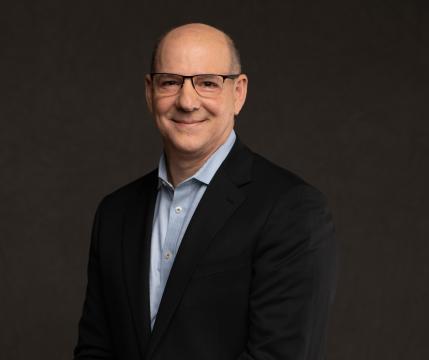
"What matters most right now is helping providers close the gap between what they negotiate and what actually reaches the P&L. Healthcare has spent years focused on purchasing power, but the next era is about performance power and ensuring savings survive across the full supply chain lifecycle.
"Today, nearly 30% of non-labor spend never touches a contract, and even when savings are negotiated, too much value leaks downstream through disconnected workflows, manual processes and limited visibility. At the same time, 66% of hospitals are operating below labor capacity, which makes automation and intelligent supply chain orchestration more important than ever.
"For the rest of 2026, Vizient is prioritizing the capabilities that help providers reduce that leakage and improve operational performance. This includes areas like procure-to-pay, price assurance, contract compliance, automation of tail spend that often sits outside traditional purchasing processes and clinically integrated supply chain capabilities. "Looking toward 2027, I think the organizations that win will be the ones that treat supply chain as an enterprise performance lever, not simply a sourcing function. The future belongs to organizations that can combine technology, data, expertise and embedded execution to create measurable financial and operational impact."
— John Grande, senior vice president and general manager, Spend Management Services & Delivery, Vizient, and BLF Founding Sustaining and Educational Partner
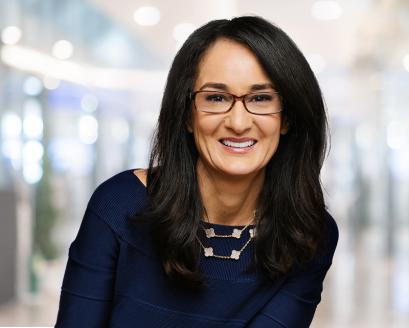
"The healthcare supply chain is at an inflection point. The first part of 2026 reinforced what many of us already know: The industry is still carrying too much fragility, too much manual work and too much workflow debt, meaning the reconciliation, exception handling and rework teams absorb every day just to keep operations moving. For the rest of the year, the priority is turning the tide on workflow debt and helping teams make faster, better decisions. "At GHX, we are focused on helping supply chain teams spend less time chasing exceptions and more time solving the problems that matter. That means scaling practical capabilities that connect data, workflows and trading partners so teams can spot issues earlier, make better decisions and coordinate action across the network. Teams have spent too long making fragmented systems work through heroic effort, and that is not sustainable when clinicians and patients depend on the supply chain working reliably. "We are also focused on building with the industry because we know the best ideas come from listening to the people closest to the work: providers, suppliers, distributors and the broader healthcare supply chain community. GHX's role is to help connect the right data, people and workflows so organizations can respond faster and operate with more confidence.
"Looking ahead to 2027, I think the conversation will shift from what AI might do to what it is actually helping teams do differently. Capabilities like earlier warnings, smarter recommendations and more coordinated action across trading partners will start to become standard expectations, not future aspirations.
"BLF's 20th anniversary is a meaningful moment to recognize how far the profession has come, but also to challenge ourselves on what the next 20 years of healthcare supply chain leadership can make possible. The organizations that lead will be the ones that stay anchored to purpose, move faster and work more openly across the industry to build a stronger, more resilient healthcare system."
— Tina Vatanka Murphy, CEO, Global Healthcare Exchange LLC (GHX), and BLF Platinum Sustaining and Educational Partner
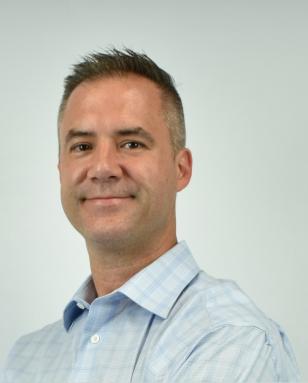
"Some of the key priorities leaders should be focusing on right now include: "Stabilize the fundamentals. Invest the time to build a strong operational foundation. This means improving data quality, establishing discipline in areas like demand planning, and ensuring contracts are aligned with actual user requirements. Without this baseline, more advanced initiatives will struggle to deliver value.
"Targeted automation. Be deliberate about where you apply automation. Rather than broad, unfocused transformation efforts, prioritize two to three high-impact use cases, such as stock management, PAR optimization, or [operating room] preference card accuracy, where outcomes can be clearly measured and scaled.
"Workforce enablement. Assess the skills your organization will need to succeed in the future and invest accordingly. Too often, teams remain focused on transactional execution rather than strategic contribution. Enabling your workforce to think analytically, interpret data, and drive decisions is critical to long-term success."
— Tom Redding, executive vice president, Healthcare, St. Onge Co., and BLF Silver Sustaining Partner

"As chair of AHRMM's Young Professionals Advisory Council (YPAC), I'll share what we're hearing from the community and where we're focused.
"First, AI literacy. Not just understanding what AI can do but learning to use it responsibly to make individuals more productive and organizations more efficient. There's a real gap between the people who are experimenting with these tools daily and those who haven't started. Closing that gap is a top priority.
"Second, resiliency planning. Shortages are not going away. Every health system needs a strategy for how they respond to disruptions, not just reactively, but with proactive plans and the right data to act quickly when something breaks.
"Third, workforce development. How do we train the next generation of supply chain leaders, and how do we bring more people into this industry in the first place? This is where the YPAC is putting real energy right now. We've been showing up at regional AHRMM chapter events across the country, from New England to North Carolina to the Rockies, connecting with local universities and putting young professionals in front of students who have never considered healthcare supply chain as a career path. We also launched a quarterly 'Meet the YPAC' networking series that brings college students together with early-career professionals to hear how they got here and what the opportunities look like. The response has been strong, and we're just getting started.
"Looking toward 2027 and BLF's 20th anniversary, I hope we can look back and say that the pipeline of talent coming into this profession is stronger than it was when most of today's leaders started. That's what the next generation owes the current one: Not just carrying the work forward but making sure there are enough people ready to do it well."
— Reuben Philip, Future Famers Class of 2025, and director of product, Clarium
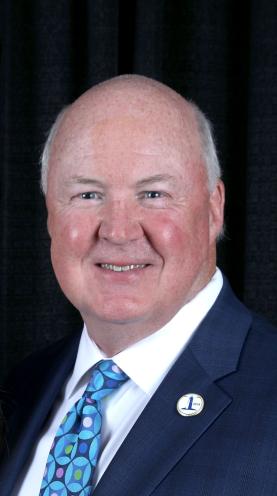
Leading more strategically in the following areas:
- "Connecting more intentionally with leadership
- "Understanding what is really important to our organization
- "Understanding what will be needed from our group in the future
- "Creating a vision with collective buy-in from leadership and my group
- "Understanding the limitations and constraints being placed on me
- "Devising a plan to eliminate hurdles that restrict my ability to succeed
"Executing more intentionally in the following areas:
- "Evaluating staff and investing in their developmental areas of need.
- "Sourcing new talent that will enhance capabilities and perspectives.
- "Delivering on expectations and documenting results.
- "Seeking credible partnerships that expand and improve my capabilities in areas that I cannot effectively build internally.
- "Seeking opportunities to translate our supply chain contribution into the language that is appreciated by direct constitutes and leadership.
- "Developing and enhancing the relationships with my peers — we are all better when we collaborate and learn from each other."
— Vance Moore, Bellwether Class of 2019
"The focus for 2026 revolves around negotiations that drive cost savings, rebates, and best pricing. Part of this work involves doubling down on our strategic supplier relationships to expand depth and breadth of portfolio coverage."
— Ryan Burke, Future Famers Class of 2022, BLF Advisory Council, and vice president, Strategic Sourcing, Pandion Optimization Alliance
"Assume efficiency and support and solutions that integrate within current workflow so not adding unnecessary change and redundancy. For BLF's 20th year, focus on how healthcare supply chain has evolved in this time frame. What we have learned and what is actually delivering meaningful impact?"
— Maria Hames, partner, HealthCare Links, and BLF event partner
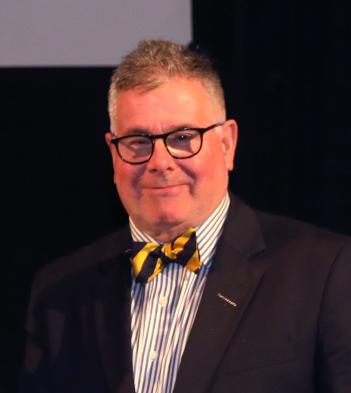
- "Peace.
- "Mentoring leaders."
— Charlie Miceli, Bellwether Class of 2023
"For the rest of this year, the priority for Surgence is very clear: Turning capability into sustained outcomes in partnership with our customers. The market has no shortage of tools or pilots. What it needs is proof that improvements can stick. That means focusing on how insights translate into repeatable execution across real operations, not just isolated wins.
"We are prioritizing a few things:
- "Expanding the Surgence ecosystem within a framework of world-class security and governance, allowing providers, suppliers, and distributors to work from the same foundation;
- "Embedding decision-making directly into workflows, so teams move faster from signal to action;
- "Strengthening collaboration across the network, so organizations are not solving problems in isolation.
"We are seeing clearly that the biggest opportunities in healthcare supply chain are not inside a single organization. They exist at the intersection of organizations. Looking into 2027, I think the conversation shifts from capability to coordination at scale.
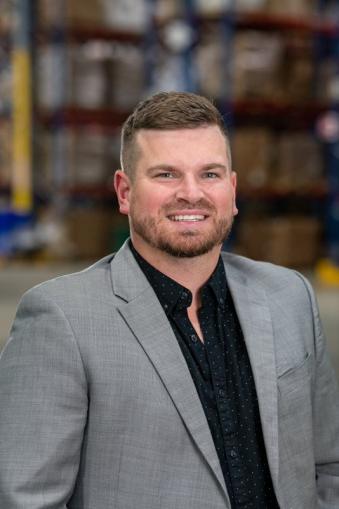
"The industry has talked about integration for years. What is changing now is that we can actually execute against it. A networked model, where data is shared once and leveraged across many, creates a different level of resilience, efficiency, and transparency. Our customers are also increasingly valuing the advantage of connecting once, into the Surgence ecosystem, and immediately being able to collaborate across their connected trading partners."
— Cody Fisher, president, Concordance Innovations (Surgence), and BLF event partner