 Welcome the new, but cherish, revere and value the old
Those with experience laid and maintain the foundation for development, growth
By Rick Dana Barlow
Deep down, those who have retired after a career in healthcare supply chain management may look back fondly and respectfully at their accomplishments — particularly if they have been inducted into Bellwether League Foundation's Healthcare Supply Chain Leadership Hall of Fame.
Unfortunately, one attribute also seems to ring true for many. After serving a proverbial lifetime in an essential profession, they tend to look around themselves today and witness the vast technological advancements as well as the infusion of younger blood and composure that contributes fresh new ideas designed to propel the industry forward ... and somehow feel unqualified and useless to contribute anything more.
Nothing could be further from the truth.
Why? Despite all the new faces, new challenges and sexy new technology, the underlying principles of conducting business professionally remain. And rightly so.
Without human creativity, experience, ingenuity, professional ethics and standards and wisdom, the industry and profession might just be a cluttered garage full of tools and toys alternately picked up, used and discarded by a parade of people migrating through their careers.
But with time and experience comes depth, composure, business acumen and accountability.
BLF's Leaders & Luminaries posed a simple question to those in the Bellwether Community, leading them to peer into the past for historical continuity. What are some of the "analog," "old-fashioned' business skills that remain relevant and timeless even in today's techseduced healthcare supply chain and why do they matter?
Almost immediately, a single-word, tech-free observation reverberated through the mindsets of young and old alike. See if you can spot the common denominator.

The skill that never goes away is deeply listening and understanding the root of a problem before trying to solve it," observed Reuben Philip, Future Famers Class of 2025, and director of product, Clarium. "Too often, a solution gets brought in before anyone has truly understood the problem. That leads to surface-level implementations where the people who deal with the challenges every day gain little value, or worse, resent the change because it wasn't built for them.
"Listening first, understanding the problem at each system, and then tailoring a solution to meet those specific needs before measuring outcomes is an underrated discipline," he continued. "We sometimes believe technology can fix anything, but without human oversight and shepherding, we don't get very far.
"Relationship-building is the other one," Philip insisted. "We trust people before we trust technology. When you listen deeply and build alongside someone, you develop trust that carries you through the hard parts of any implementation. Most of my career, the technology I've helped build succeeded not because the tech itself was great, but because I understood the workflows and the motivations of the people performing them. What we were building was for them, not for us. That understanding only comes from building deep relationships."

Ryan Burke, Future Famers Class of 2022, BLF Advisory Council, and vice president, Strategic Sourcing, Pandion Optimization Alliance, agrees whole-heartedly.
"Relationship building will remain relevant in the future," he insisted. "Supply chain, at its core, is still a relationship business. From working with front line clinicians to engaging with a supplier on keeping costs firm during a time of disruption. As more and more AI tools are introduced to the market, those who can communicate and tell a compelling story with stakeholders will succeed."
Making relationships, understanding what your customers need, mentoring and nurturing your employees through education and training are key, according to Barbara Strain, Bellwether Class of 2021, BLF Board Chairman, and principal, Barbara Strain Consulting.
Mentoring and experience/knowledge transfer that sustains success and listening to the front line for the ground truth, echoes Charlie Miceli, Bellwether Class of 2023.
Maria Hames, partner, HealthCare Links, and BLF event partner, points to what she calls the tried and true — communication, critical thinking and leadership. "Technology does not replace judgment, partner collaboration and relationships," she asserted. "We are in this together and silo thinking does not produce improved results for industry."

Four principles matter, according to Vance Moore, Bellwether Class of 2019.
- If it seems too good to be true... it probably is. "New tech is very promising, but it comes with some of the most intense scrutiny of what comes out of the 'black box.' There will be more bad than good until we wrestle the beast into submission."
- Realization that "we are at least half the problem." "Avoid the victim mindset. It is easy to use the excuse of 'we don't get the respect or budget we need.' We must create our opportunities — they will rarely be given to us."
- Math really matters. "At the end of the day we must prove our worth and usually in math terms. Are we worth the investment made in us? We need to be very attentive to dynamic formulas being calculated by others evaluating our value. We all have tabulation tables in our heads — manage the math."
- People really matter. "We get nothing done on our own. We must invest the treasure of time in our staff, our leaders, our customers, our peers, our families and our friends. People matter and balance also matters," Moore noted.

"Strong relationships remain the foundation of effective leadership, especially in environments where change is constant and often resisted," said Tom Redding, executive vice president, Healthcare, St. Onge Co., and BLF Silver Sustaining Partner. "The reality is that transformation doesn't happen through tools or mandates; it happens through trust. Leaders who invest in relationships across their organization, both with senior stakeholders and frontline contributors, create the alignment needed to move faster with less friction. When trust is high, organizations see more support, less chaos, and a greater willingness to adopt change.
"At the same time, some of the most critical leadership instincts are at risk of erosion," he continued. "Judgment, for example, is increasingly undervalued in a world that prioritizes data above all else. While data is essential, it doesn't replace the ability to interpret nuance, make decisions under uncertainty or take calculated risks. Over-reliance on data can create a false sense of precision and delay action when leadership judgment is actually what's required."
Redding indicates that accountability and ownership are also becoming less consistent. "As organizations introduce more advanced technologies, including AI, there's a growing risk of diffused responsibility. It becomes easier to attribute decisions to 'the system' rather than to individuals. But high-performing organizations don't outsource accountability. Strong leaders ensure that, regardless of the tools in place, ownership remains clear and decisions have responsible stewards," he noted.
"Ultimately, technology will continue to evolve, but the organizations that succeed will be those that reinforce, not replace, the fundamentals: Trust-based relationships, sound judgment and a culture of accountability. These are not outdated skills; they are the operating system that allows everything else to work," Redding said.

John Grande, senior vice president and general manager, Spend Management Services & Delivery, Vizient, and BLF Founding Sustaining and Educational Partner, emphasizes trust.
"One timeless skill is the ability to build trust through expertise, not just access," he noted. "Relationships still matter, but providers today expect stronger insights, clearer data and a deeper understanding of how operational decisions impact financial performance. Leaders need to walk into conversations informed and prepared to challenge assumptions with evidence and expertise. They also need the executive presence to deliver those insights effectively — earning credibility, influencing decisions and helping organizations act on what the data is telling them.
"In an increasingly digital and automated environment, showing up still matters," Grande continued. "Spending time with providers, clinicians, suppliers and frontline teams gives leaders context that data alone cannot. The most effective leaders blend analytical insight with firsthand understanding, using both to engage stakeholders, build trust and help organizations make better decisions. Intelligent orchestration depends on understanding how people, processes and technology connect across the system, not just automating tasks in isolation.
"What got the industry here will not get it where it needs to go next. Technology will continue to accelerate change, but judgment, context and trusted partnership remain critical to leading through complexity," he concluded.

Even as healthcare supply chain becomes more technology-driven, the fundamentals still matter, according to Tina Vatanka Murphy, CEO, Global Healthcare Exchange LLC (GHX), and BLF Platinum Sustaining and Educational Partner. In fact, she argues that they may matter more.
"Critical thinking is essential. AI can surface insights, but people still have to ask the right questions, challenge assumptions and understand the context behind a decision. In healthcare, that judgment matters because decisions can affect cost, continuity of care, patient safety and health outcomes," she said.
"Relationships also remain central," Murphy insisted. "The supply chain is still a network of people and organizations that have to trust each other, especially during disruption. Technology can help connect the system, but relationships are what make collaboration work. "Communication is another timeless skill. Leaders have to turn complexity into clarity, align teams around a shared goal and help people understand not just what is changing, but why," she continued. "And accountability matters more as AI becomes more embedded in daily work. There still has to be human ownership of outcomes, decisions and followthrough. Technology can accelerate work, but it does not replace leadership. The more advanced our tools become, the more important it is to think clearly, build trust, communicate well and stay accountable for the impact our decisions have on caregivers, healthcare organizations and patients."
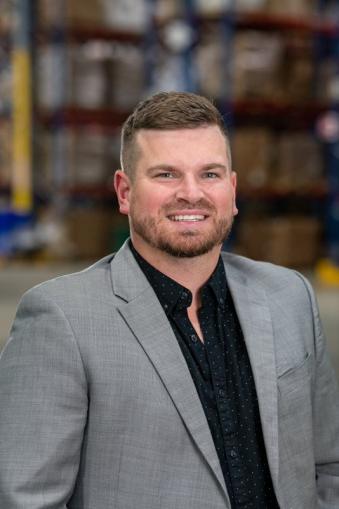
There are some things that do not change, even as technology evolves, according to Cody Fisher, president, Concordance Innovations (Surgence), and BLF event partner.
"Clarity of problem definition matters as much as ever. If you are not clear on what you are solving, better data and better tools will not fix it. Operational discipline still wins. Healthcare supply chains are complex, but the fundamentals still apply. Clear ownership, defined processes, and accountability drive performance. Technology should reinforce those things, not replace them. Trust and partnership are also critical. Because supply chain is inherently multi-enterprise, the ability to collaborate across organizations is not a soft skill. It is a core capability. Shared data, shared workflows, and shared incentives all depend on trust between partners.
"Technology can enable these things, but it cannot substitute for them," Fisher added.