 Smart Stashing
Above or below trap doors, inside hidden lairs, behind closets
Where might safe, smart places be to stash stock when necessary?
By Rick Dana Barlow
While hidden caches behind staircases, in closets, above the ceiling or under the floor may be as intriguing as hidden tunnels and secret panic rooms, such mystery may be misplaced in a healthcare organization dedicated to a safe and sterile environment for patient care and cost consciousness even during peak demand for selected products.
But might there be some smart ways to sneak extra storage safely into every available space within a healthcare facility without being accused of stashing or rescuing just-in-time distribution after the global pandemic or even maximizing the benefits of bulk buying?
For some in the Bellwether Community, the concept draws humor and laughter; for others, scorn and tutelage; and for others, a consulting opportunity.

"My advice: Every day, slip one extra Purell pump into your coworker's bottom drawer and see how long it takes them to notice," quipped Reuben Philip, Future Famers Class of 2025, and director of product, Clarium.
"Jokes aside, the problem of space is real, especially in urban settings where every square foot is expensive," he countered. "The most impactful thing you can do before rearranging a single shelf is look at your data. What's actually being used from those spaces? What's expiring and getting thrown away but still being reordered, so it looks like it's being consumed? That cycle creates phantom demand that eats up real space.
"The other piece is partnering with your clinicians to stock the items they truly need at point of use and keep emergency or low-frequency items in a centralized location," Philip recommended. "It doesn't all need to be on the floor. When you have good inventory visibility and the data to back up your decisions, you don't have to sneak things in. You can make the case that the right items are in the right places, and free up space you didn't know you had."

Ryan Burke, Future Famers Class of 2022, BLF Advisory Council, and vice president, Strategic Sourcing, Pandion Optimization Alliance, pleaded faux surprise.
"I wasn't aware of any space available in a hospital? All kidding aside, I would lean on partners (distributors) to take on the inventory burden and prevent hoarding," he suggested.

"Global visibility of inventory is the great 'elastic waist band' of the supply chain," Vance Moore, Bellwether Class of 2019 chimed. "If I have dynamic visibility of my inventory and proactive analytics tools to monitor status and predict demand, I can confidently do more with less rather than always looking for more space. Although this is an exaggeration, we often try to store everything that everyone wants in every place rather than focusing on standardizing to the best products and locating them in the appropriate amounts based on your ability to cost effectively and proactively respond to the daily demand cycles. Visibility and capabilities are the key to supply chain optimization. 'Visibility' provider confidence to your customers and 'capabilities' provide the proof of your promise to serve in advance of the need.
"I am also a big fan of CSCs if you support multiple facilities. CSCs provide cost effective storage space for strategic stock purchases and build resiliency in the supply chain. It also creates unique bulk savings opportunities and other creative value elements that are not afforded to most hospital storage allocations," he added.
"The best way is to optimize inventory management — reduce overstock and eliminate outdated and unused items. If space is truly fixed, you have to see what you can eliminate in order to substitute with other stuff," suggested Fred Crans, Bellwether Class of 2020, Board Outreach Ambassador, and healthcare business development executive, St. Onge Co., BLF Silver Sustaining Partner.
- Standardization across departments. "Aligning on common supplies, SKUs and equipment reduces unnecessary redundancy. When each department operates with slight variations, it drives duplicate inventory, fragmented storage and excess safety stock. Standardization not only frees up space but also simplifies replenishment and improves visibility."
- Maximizing vertical and high-density storage solutions. "Leveraging high-density shelving, mobile racking systems, or automated vertical lift modules allows organizations to significantly increase capacity within the same physical footprint. These solutions shift the constraint from floor space to cubic space often unlocking substantial 'hidden' capacity," he said.
Tina Vatanka Murphy, CEO, Global Healthcare Exchange LLC (GHX), and BLF Platinum Sustaining and Educational Partner, pushes back on the premise.
"If teams feel they need to 'sneak' extra storage into every available space, that tells us something important about the system they are working within," she observed. "In most cases, stashing is not happening because people are trying to be inefficient. It happens because clinicians and supply chain teams are trying to protect patient care. If they do not have visibility into what is available, or they do not trust that supplies will be there when needed, they create their own buffers.
"The better question is not where to find more hidden space. It is how we eliminate the need for hidden inventory in the first place?" Murphy emphasized. "That starts with visibility and trust. Teams need a clearer view of what is on hand, what is in transit, what Tina Vatanka Murphy is at risk and where demand is changing. They also need workflows that connect clinical, supply chain and operational teams so decisions are made with shared context, not separate workarounds.
"This is where technology can help, but only if it solves the real problem," she continued. "Better data, smarter signals and more coordinated workflows can help organizations reduce the manual tracking, reconciliation and uncertainty that lead people to create safety stock wherever they can find room. At the end of the day, resilience does not come from filling more closets. It comes from building a supply chain that is reliable and trusted enough that people no longer feel they have to create their own backup plan to protect care."

Also eschewing subterfuge, John Grande, senior vice president and general manager, Spend Management Services & Delivery, Vizient, and BLF Founding Sustaining and Educational Partner, recommends stretching creativity.
"The safest way to add storage in a healthcare facility is not to 'sneak' it in, but to design it intentionally," he said. "Strong supply chains create visibility into what inventory is truly needed, where it should live and how quickly it should move. Facilities can gain meaningful capacity by right-sizing inventory, using vertical space in approved rooms, creating standardized point-of-use storage, converting underutilized areas into designated storage zones, and assigning clear ownership and PAR levels.
"For critical care supplies and essential medications, providers should consider programs such as Vizient Reserve, which provide access to strategically positioned inventory and can help mitigate disruptions without requiring providers to hold excess product onsite," he added.
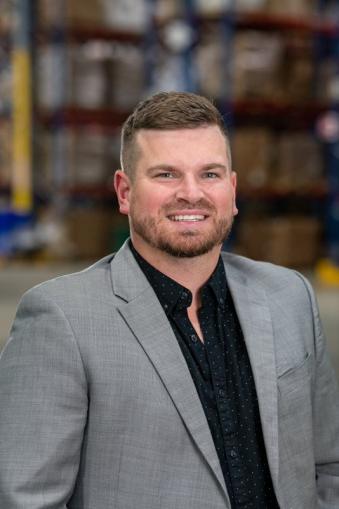
"The reality is that most organizations are already operating with more inventory than they realize," indicated Cody Fisher, president, Concordance Innovations (Surgence), and BLF event partner. "While I don't deny that our provider customers are always looking for space in their facilities, the key issue is not just space, it is visibility and coordination.
"The more effective approach is not to find more places to store inventory. It is to use the network more intelligently," he said. "When you have visibility across locations, the ability to manage substitutes, and coordination across partners, you create something much more powerful than extra storage. You create optionality. Instead of asking, 'Where can we put more inventory?' the better question becomes, 'How quickly can we access the right inventory when we need it?'
Fisher notes that such a shift requires:
- Shared visibility across sites and partners
- Governed substitute strategies
- Coordinated workflows to move inventory where it is needed
"Organizations that operate this way rely less on physical buffers and more on intelligent, networked decision-making. And that is ultimately a more scalable and sustainable model," he said. "At the end of the day, the biggest opportunity in healthcare supply chain is not a single technology or a single organization. It is the ability to bring the system together. When data becomes shared truth and decisions become coordinated action across the network, you unlock something fundamentally different. That is where resilience improves, costs come down, and care becomes more consistent.