 R-E-S-P-E-C-T in supply chain
Find out what it means to healthcare provider executives
Supply Chain remains fairly well-respected in most industries — including healthcare manufacturers, distributors and retailers — but the same cannot necessarily be said for the healthcare provider market segment. For some reason, supply chain executives, leaders and professionals among hospitals and other healthcare provider organizations don't seem to possess and wield nearly as much clout and influence, if any at all.
If supply chain management and operations remain a relatively homogenous function in the overall economy, regardless of organization, why does this seem to be the case, if at all? Because they represent a support service? Because they, by and large, don't generate revenue for the organization like all the others?
The notion sends ripples through the Bellwether Community.

Mike Langlois, Bellwether Class of 2025
"I believe COVID had a dramatic effect on increasing the respect of Supply Chain in the hearts and minds of the healthcare provider market segment. The major issue, as is for other support services, is the lack of revenue generation by Supply Chain for our healthcare institutions. Revenue-generating operations get most of the attention as without revenue the organization doesn't exist. Cost reductions positively affect the bottom line, but revenue is still like gold."

Tom Lubotsky, Bellwether Class of 2022, president, The Lubotsky Alliance Group LLC, formerly vice president and Chief Supply Chain Officer, Allina Health
"I disagree with this statement. Provider-based healthcare supply chains have accelerated improvements, particularly with their work centered on resiliency. Partnering with suppliers, distributors, GPOs product assurance programs and practices. The Healthcare Industry Resilience Collaborative (HIRC) has brought these healthcare industry partners together to continue advancing this critical work. New capabilities surrounding demand-based planning and adoption of collaborative planning, forecasting and replenishment (CPFR) skill sets are emerging to elevate competencies in assuring products are efficient and reliably available.
"In addition, competency and capabilities continue to grow among provider-based healthcare supply chains. Clearly, there is now more evidence that these healthcare system supply chains 'own' more of all the non-labor spend by embracing the full range of indirect (services) spend. Adding analytical and sourcing capability, expertise and tools offered in the market including learning from other global supply chains that have for years been responsible fully for this supply chain spend has added knowledge and know-how toward addressing the full range of non-labor spend.
"Many healthcare supply chains have also progressed with addressing sustainability initiatives critical to contributing to healthier communities and have driven out waste. Furthermore, efforts to work with the set of community suppliers to keep the spend local and distributed among all small and large businesses have produced new innovations in partnerships. The Healthcare Anchor Network continues to lead the understanding and promotion of best practices in this arena."

Reuben Philip, Future Famers Class of 2025, director of product, Clarium Inc.
"I agree and think there's a structural reason for this, and it's not about the quality of the people doing the work. In manufacturing or distribution, supply chain is the core operation. At Toyota, if the supply chain breaks down, nothing moves. The entire business is supply chain, from raw materials to the finished product. The same is true for healthcare distributors and manufacturers. Supply chain is the primary skill, and it gets recognized as such.
"In a healthcare provider organization, the core mission is patient care. The skill that gets the most visibility is clinical. Physicians, nurses and surgeons are the reason patients walk through the door, and rightly so. Supply chain's job is to make sure those clinicians have everything they need to deliver that care. When it works well, it's invisible. Nobody chooses to go to Mass General because they have a great supply chain. Patients research outcomes, surgeon expertise and quality of care. That's what drives the decision, and rightly so.
"That said, supply chain represents a significant share of a hospital's total operating expenses, second only to labor. When you're managing that much of the budget and your work directly affects whether a procedure happens on time or gets delayed, that's not a supporting function. That's a strategic one. The challenge isn't that provider supply chain professionals aren't doing critical work. It's that the nature of healthcare means their success is designed to be invisible. When everything is in the right place at the right time, the credit goes to the clinical team. That's a visibility problem, not a competence problem, and I think it's important to name it honestly rather than overstate or understate our role."

Tom Redding, executive vice president and healthcare practice leader, St. Onge Co., Silver Sustaining Partner
"I generally agree with the premise. In manufacturing, distribution and retail, supply chain is visibly tied to revenue, margin, and customer experience. If supply chain fails, the business fails quickly and visibly. That creates inherent respect, investment, and executive attention.
"In healthcare provider organizations, supply chain is often perceived differently:
- It is seen as a cost containment function, not a value creation engine.
- Its impact is indirectly visible (patient care outcomes are rarely attributed back to supply chain performance).
- Success is often defined as 'nothing went wrong,' which makes value harder to demonstrate. [Editor's Note: See related story in this edition.]
"So, the issue isn't capability, it's visibility, attribution and perceived proximity to care delivery."

Ryan Burke, Future Famers Class of 2022, , BLF Advisory Council member, vice president, Strategic Sourcing, Pandion Optimization Alliance
"I largely agree. Supply chain tends to be well-respected in manufacturing, distribution and retail because it's clearly tied to revenue and customer experience. In provider settings, the value is just as significant — but historically less visible, more complex and more dependent on clinical alignment."

Fred Crans, Bellwether Class of 2020, BLF BOD Outreach Ryan Burke Ambassador, and business development executive, St. Onge Co., Silver Sustaining Partner
"I agree. With the exception of the larger and more progressive IDNs, Supply Chain (formerly Materials Management, formerly Purchasing), the function has always been seen as a necessary support service but not a strategic one. This is probably because healthcare executives receive different focal points in their educational process than 'legitimate' business leaders do. Historically, they have aimed at pacifying the physicians, and what is now known as Supply Chain was a transactional part of that.

Vance Moore, Bellwether Class of 2019
"Respect for the provider-based supply chain world is a very difficult proposition. Like it or not, the organizations we serve don't truly depend on us. They acknowledge us and they appreciate us, but they don't always respect us. Respect is often a function of dependence and consistent performance.
"From the dependance perspective, other industry's success is dependent on the supply chain sourcing the exact product at the exact times for the organization to succeed. In the provider world, caregivers are remarkably adaptable to what they have at their disposal in their time of need — I have seen remarkable outcomes with suboptimal supplies and equipment. These examples surface daily in war times but were significantly highlighted for most of us during COVID. We often could not source what we wanted but the caregivers were able to heroically respond with what they were provided.
"From the performance perspective, respect is developed via a more methodical and strategic mindset. The world respects someone who can develop and communicate a vision that serves the mission of the organization. Then they are acknowledged when they execute that plan yielding the intended results. Finally, the leader must tell 'their' (supply chain success) story in terms of the success of the overall mission of the entity. It is through the repetitive cycle that respect is earned. It is not about the supply chain's success; it's about how the supply chain contributed to improving outcomes, caregivers' lives and the financial bottom line."
Maria Hames, managing partner, HealthCare Links, BLF event partner
"Mostly agree — healthcare supply chain is much more fragmented than other industries. Clinical preference and patient care cause more unpredictable supply chain. A unique regulatory environment and multiple stakeholders affect supply chain practice. Because of resource restrictions, we commonly fall back to the 'easy button' when a crisis subsides giving our overall maturity of supply chain starts and stops."
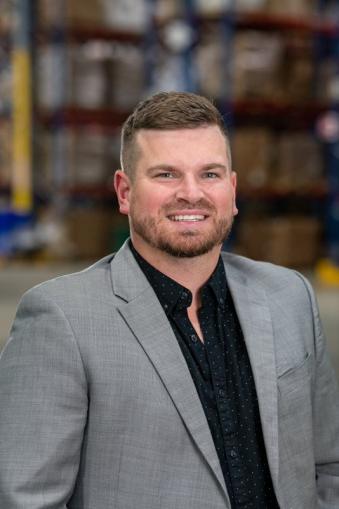
Cody Fisher, president, Concordance Innovations (Surgence), BLFIRE event partner
"I think there is some truth to that, and I think it comes down to how supply chain shows up inside provider organizations versus other parts of the industry.
"In many industries, supply chain is seen as a strategic lever. It is tightly connected to revenue, customer experience and competitive advantage. The impact is visible and measurable. Inside healthcare providers, supply chain has historically been viewed more as a support function. It is expected to be reliable, cost-conscious and operationally efficient, but not always positioned as a driver of enterprise-level outcomes.
"The reality, though, is that healthcare provider supply chain sits at the center of some of the most important decisions in the system. It influences cost, clinical variation, resilience, and the ability to deliver care without disruption.
"The gap is not importance. The gap is visibility and coordination.
"Many of the biggest opportunities in provider supply chain exist across organizations, not within a single hospital or system. When data is fragmented and decisions are made in silos, the full impact of supply chain never shows up in a way the broader organization can see. As the industry moves toward shared data, coordinated workflows and more network-based execution, I think that perception starts to change. Supply chain becomes less about maintaining operations and more about actively shaping them."
Barbara Strain, Barbara Strain Consulting, Bellwether Class of 2021, BLF Board Chairman
"Healthcare is not predictable. It varies from organization to organization, lacks standardization in titles, roles, practice, products, equipment, etc. Reimbursement is complicated. How dollars flow through healthcare is complicated. [There are] frequent leader and governance changes."
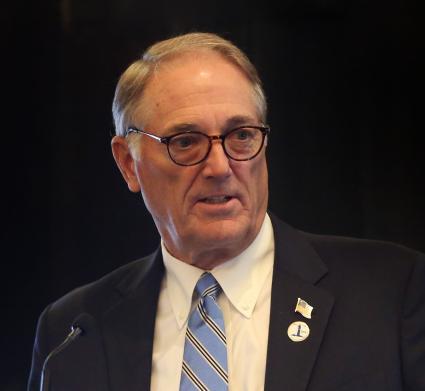
Carl Meyer, Bellwether Class of 2019, president, The Wetrich Group, BLF event partner
"While getting better post-COVID, the industries mentioned all sell a product or service. In healthcare where the provider is (theoretically) improving the quality of life for the patients and their families, it is easy to lose sight of the critically important role that Supply Chain plays. COVID opened the door for many Supply Chain professionals to become [Chief Supply Chain Officers] and have a seat in the C-uite, but not all of those were ready for that elevated role and some did not have the management skills to be proficient in the new, more demanding role."

Tina Vatanka Murphy, president and CEO, Global Healthcare Exchange Inc. (GHX), BLF Platinum Sustaining and Educational Partner
"For a long time, provider supply chain operated behind the scenes. In many health systems, it was viewed primarily as a cost-management or transactional function. That was never the full story, but it was often the perception. Healthcare is also uniquely complex. Clinical preferences, fragmented systems, inconsistent data and highly variable workflows make provider supply chain very different from industries built around more standardization and predictability.
"COVID changed the conversation. It made the connection between supply availability, operational continuity and patient care impossible to ignore. Since then, supply chain leaders have increasingly moved from the back office to the strategic table.
"At GHX, we see provider supply chain teams helping lead conversations around resiliency, AI, workflow redesign, clinical alignment and financial sustainability. The role is shifting from a transactional cost center to a care-enablement engine, helping organizations make smarter, faster decisions across increasingly complex systems.
"There is still work to do. Many provider supply chain teams are carrying enormous operational burden while navigating legacy systems, disconnected workflows and too much manual work. But that is exactly why the function deserves more recognition, not less.
The opportunity now is to recognize supply chain for what it really is: critical infrastructure for modern healthcare delivery. When it works well, it supports caregivers, protects continuity of care and helps healthcare organizations operate with greater confidence."
Charlie Miceli, Bellwether Class of 2023
"[I] disagree. Supply Chain in healthcare has made sea-change-type movement regarding respect during/post-2020 pandemic; recognition and results have driven the increase in respect."