 Provider-based supply chain operations represents serious business
So why does it seem like the Rodney Dangerfield of supply chain market segments?
Keeping supply chain fluid, flowing and functional within a hospital or other healthcare provider organization is nothing to deride or mock. Lives depend on it.
Further, pearl clutching should be avoided. Many recognize that provider-based supply chain doesn't attract nearly the respect and value that its siblings in other industries — even as close to the manufacturers, distributors and service firms that sell to providers — receive without question or rebuke.
The late comedian Rodney Dangerfield made the lack of respect a cornerstone of an otherwise successful career. What's funny is how supply chain executives, leaders and professionals within healthcare provider organizations seriously struggle to attain relative success.
Why?

"Provider-based supply chain feels like the Rodney Dangerfield of the profession because its impact is enormous — but often invisible, misunderstood and influenced by stakeholders who don't view it as central to care delivery. However, supply chain at its core is central to the delivery of care. Supply chain leaders should use their voice to tell the value story for how the supply chain profession impacts patient care."
Ryan Burke, Future Famers Class of 2022, vice president, Strategic Sourcing, Pandion Optimization Alliance Ryan Burke

"Supply chain in healthcare is most visible when it fails. When there's a backorder, a stockout or a case delay because supplies weren't available, everyone notices. When everything is there and the surgery goes perfectly, no one thinks about how it got there. That asymmetry is the root of the perception problem.
"In manufacturing and distribution, supply chain performance is measured and reported constantly. It's on the dashboard. In healthcare, the metrics that get leadership attention are clinical outcomes, patient satisfaction scores, readmission rates and financial margins. Supply chain's contribution to all of those often goes uncredited because it's not tracked the same way. Supply shortages have delayed patient treatment in a significant number of cases and product backorders regularly force procedure cancellations. Those are patient care outcomes driven by supply chain, but they rarely get attributed that way.
"The good news is that this is shifting. More health systems are giving supply chain leaders a seat at the strategic table, AHRMM is pushing frameworks like the AHRMM Keys to give the profession standardized metrics that connect supply chain performance directly to what the C-suite cares about. If you haven't looked at the AHRMM Keys and their KPI benchmarking tool, I'd encourage it. It gives you a way to measure your organization's performance against peers, which is exactly the kind of data that earns credibility with leadership. But we still have work to do in making its impact visible before something goes wrong, not just after."
Reuben Philip, Future Famers Class of 2025, director of product, Clarium Inc.
"I think this was more prevalent prior to COVID, although it still exists in many aspects. 'Moving boxes is not sexy.' Like most support services, attention is only garnished when it doesn't work. [Editor's Note: See related story this edition.] We celebrate a new revenue stream much more than a cost reduction idea. It is the fabric of most industries."
Mike Langlois, Bellwether Class of 2025
"I think there is a decent amount of respect for highly performing supply chain individuals but as a function ... not so much. This may sound a little harsh, but I think we are often viewed as glorified expeditors. Someone yells and we jump into action. We are good at tactical problem solving. This is great and responding to the needs of others is rewarding, but many times we could have avoided that problem if we had strategically thought about what was needed. Problem resolution is not a good substitution for problem avoidance.
"Some of this perception is earned and some are unfair. The earned part is related to our gravitation to solving tactical problems and not spending enough time on strategic planning and problem avoidance. The unfair part is the lack of investment in supply chain tools and visibility. If we had better visibility of supply and demand, linked with decision support tools that would allow us to anticipate and fix a potential problem before it happens — our collective lives would be better.
"To some degree we need to get over it and find comfort in a job well done. We are essential but we are not considered a core function — we support care, not provide it. A supply chain job well done is eliminating problems before they happen. What is the value of a problem that was avoided? Very difficult to measure and even harder to get someone to believe you. Our peers respect us because they know how hard it is to make this look easy.
"Our clinical colleagues actually have a similar operating model, but they are assigned and earn respect due to their position as a core function in the mission of the organization. Most of what caregivers do is responding to a clinical need or crisis, yet many of the conditions could have been avoided via simple preventive care. They gain respect for their responsiveness because they are core to the mission — the provision of care. I've noticed that in most companies, those closest to the end customers are the ones that are the most respected, the most invested in, and the most acknowledged. Support functions may be essential and operate very similarly to the core, but via their support role, they will never get the respect of the core business players. Bottom line: We need to find satisfaction in the acknowledgments of those that know us best.
"Finally, I think we also struggle with developing relationships up the ladder of command. If you are a great listener, interpreter and performer, respect can be accelerated. If you commit time to learning what is important to the very top of your organization and then map your performance to what is really important, it is much easier to earn respect because you are now speaking the organizations 'performance language.' We often speak in supply chain language (e.g., fill rates, services levels, etc.), while caregivers, CFOs, and CEOs speak in much different terms. Bottom line: We need to be proficient in multiple languages."
Vance Moore, Bellwether Class of 2019
"The perception is we don't operate like other businesses; we spend too much money without seeing the return on investment — healthier populations."
Barbara Strain, Barbara Strain Consulting, Bellwether Class of 2021, BLF Board Chairman
"Provider-based supply chain doesn't get 'no respect' because its impact is not fully embraced, understood and integrated by executive leadership into the 'value' of organizational delivery of patient service and care. It is seen as operational, not strategic. Despite decades of progress, provider-based supply chains still lag global supply chain industries and do not receive the investment required to mature and optimize their full impact potential.
"Even when provider-based supply chain leadership are managing enterprise-scale spend, mitigating risk exposure, enabling clinical standardization and driving multi-milliondollar margin improvements, the cognitive bias is real: 'If it doesn't directly touch patients or revenue, it's seen as overhead.' That is not because supply chain isn't strategic — it's because healthcare leadership culture historically elevates clinical, financial or growth narratives over system optimization narratives. Often, supply chain leaders are often brought in after strategic decisions are made — expected to execute, not co-author the strategy.
"Finally, let's go further with healthcare supply chains by looking deeper in terms of their tension inside a hospital setting. Healthcare supply chain lives in constant conflict between:
- Clinical preference versus standardization.
- Cost versus innovation.
- Autonomy versus 'systemness.'
- Speed versus safety.
"They are always negotiating inside the organization every day, often without formal authority — relying on influence, data and trust. This kind of leadership is harder to see, harder to explain in an organizational chart and harder to headline. Yet, it is also the mark of a mature, high-performing system function, not a lesser one."
Tom Lubotsky, Bellwether Class of 2022, president, The Lubotsky Alliance Group LLC, formerly vice president and Chief Supply Chain Officer, Allina Health
"Provider supply chain doesn't get respect largely because it suffers from a perception gap between responsibility and recognition.
"It is responsible for:
- Availability of critical supplies.
- Standardization of products and clinical preference alignment.
"Yet it is often perceived as:
- A back-office procurement or purchasing function.
- Reactive rather than strategic.
- Detached from clinical decision-making."
Tom Redding, executive vice president and healthcare practice leader, St. Onge Co., Silver Sustaining Partner
"We are more transactionally operational than strategic as we are seen as cost center. [We] tend to be invisible when things go smoothly and are only seen when something goes wrong in the clinical side."
Maria Hames, managing partner, HealthCare Links, BLF event partner
"Except for the largest IDNs, Supply Chain leaders are usually middle level managers. Purchasing and Contracting (for commodities) is done by the GPOs and logistics is done by the various distributors. Until recently, many Supply Chain leaders rose from the ranks from dock to desk. Most of the other senior-level positions (e.g., finance, healthcare administration, clinical departments) require formal, focused educations."
Fred Crans, Bellwether Class of 2020, BLF BOD Outreach Ambassador, and business development executive, St. Onge Co., Silver Sustaining Partner
"Across many years of experience in healthcare, I have been fortunate to work with incredible professionals running vast and essential supply chain organizations within their systems. These are talented, passionate people driven to make sure patient care is never compromised. They deliver every day to ensure the right product arrives at the right time. And yet I do recognize the reality of your question. A lot of it comes down to how success is defined and how often supply chain is only visible when something goes wrong.
"When supply chain teams are doing their jobs well, the system runs quietly. Products are available. Clinicians can do their work. Leaders are not hearing about disruptions. That creates a dynamic where the work is critical, but largely invisible.
"At the same time, provider supply chains operate in one of the most complex environments of any industry. They are coordinating across thousands of SKUs, multiple clinical stakeholders, changing demand patterns and a multi-enterprise ecosystem of suppliers and distributors. And much of that coordination still relies on fragmented systems and manual processes. So you end up with a function that is solving incredibly complex problems but doing so in a way that is not always easy to measure or communicate.
"I also think there is a structural element. The supply chain is inherently cross-functional and multi-organizational, but it has historically been managed within the boundaries of a single organization. That limits its ability to demonstrate its full value. When you start to connect the system, when you move from isolated operations to coordinated execution across partners, the role of supply chain becomes much more visible and much more strategic."
Cody Fisher, president, Concordance Innovations (Surgence), BLFIRE event partner
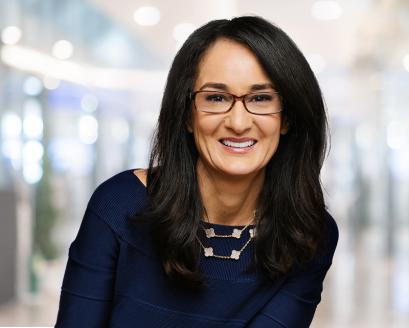
"Honestly, I think provider supply chains have historically been underestimated because when they work, they're almost invisible. The product is there. The surgery happens. The nurse has what they need. The patient gets the care they need. No one stops to ask what it took to make that possible.
"But the last few years have made it very clear: supply chain is not a back-office function. It is a clinical, financial and operational lifeline. And in healthcare, it is directly connected to patient care. So, I actually think this is the moment for provider supply chain leaders to get the respect they have always deserved. They sit at the intersection of cost, quality, resiliency and outcomes. That is not administrative work. That is mission-critical leadership."
Tina Vatanka Murphy, president and CEO, Global Healthcare Exchange Inc. (GHX), BLF Platinum Sustaining and Educational Partner
"In many cases, it is because the executive leadership does not understand the critical impact Supply Chain has until there are issues like canceled surgeries or avoidable deaths due to drug shortages."
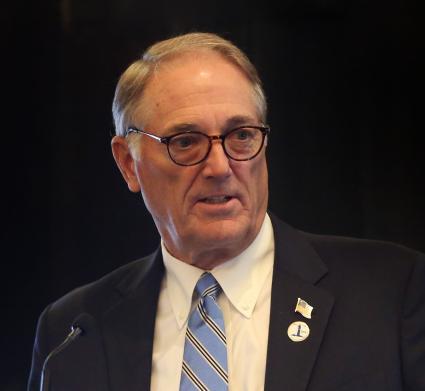
Carl Meyer, Bellwether Class of 2019, president, The Wetrich Group, BLF event partner