 COVER STORY: Healthcare Supply Chain’s X-Factor
Provider-based executives, leaders, professionals ponder how to garner, generate respect
By Rick Dana Barlow
Provider-based supply chain professionals engage in battles on a daily basis, too frequently on an hour-by-hour notice should some crisis emerge. It's not unlike the human circus magician, Professor Marvel, feverishly flipping the switches and speedily spinning the dials on an oversized computer board behind a curtain to engender awe, fear and respect of the blustery Wizard of Oz mystique ... until he is outed by a dog.
Within a hospital or healthcare facility setting, supply chain seems to feel like that. And much of that frenzied facilitating happens before the calls, complaints and emails arrive from physicians, surgeons and nurses on the clinical side, and accounts payable, accounts receivable and department heads on the administrative side. Instead, supply chain scrambles to douse fires and flames that seemingly ignite out of nowhere — a hurricane, tornado or wildfires knock out a manufacturer's plant or distributor's warehouse, along with stock to be delivered and also backup products; computer hackers unleash dataswiping and data-wiping viruses via online connectivity, affecting clinical, financial and operational records and shredding any notion of cybersecurity and data privacy; geopolitical activities around the world ripple through production schedules and transportation routes, leading to delays, stoppages, stockouts and backorders.
Any and all of these could happen overnight before the first scheduled surgical procedure in the morning.
Supply Chain must deal with it immediately, even if there was no logical or sane way to prepare for it and prevent it with backup plans and backup plans to those backup plans. There's only so much Supply Chain can do even though those outside of Supply Chain mistakenly think they don't do enough.
Call it a conundrum wrapped in an enigma cleverly disguised as inefficiency and seemingly Sisyphean in solving.
Supply Chain must navigate through crises and disasters consistently every day. Their efforts aren't measured so much as their achievements with effectiveness determined by the sounds of silence and vacant email and voicemail caches.
Through it all, Supply Chain yearns for the respect it believes it deserves for fighting these behind-the-scenes battles, delivering products and services necessary for clinicians to administer and deliver patient care and bolstering the administrators and department heads keeping the doors open.
Supply Chain executives, leaders and professionals may wonder what it will take to attract the recognition of and respect for what they do with a seat in the C-suite potentially on the line. Of course, a C-suite seat may be the sweet spot, but that requires recognition and respect, returning the fight to square one. In fact, some of the enterprise-minded scoff that a C-suite seat may not solve any problems anyway and instead focus a brighter light on operations not well-understood by fellow leaders.
C-suite connections linked to outcomes
Tina Vatanka Murphy, president and CEO, Global Healthcare Exchange Inc. (GHX), BLF
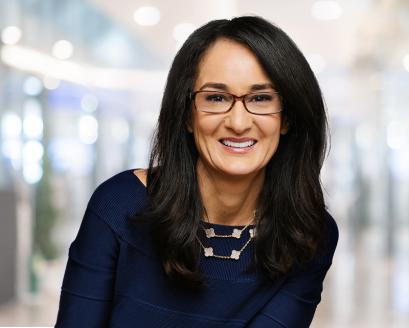
Platinum Sustaining and Educational Partner, dismisses the notion that respect and influence
are exclusively granted by a title.
"Provider supply chain leaders gain influence when they connect their work to what the C-suite already cares deeply about — clinical quality, financial sustainability, operational resilience, workforce efficiency and patient outcomes," she insisted. "The more supply chain can move from saying, 'Here is our operational issue' to saying, 'Here is the enterprise risk, here is the financial impact and here is how it affects care delivery,' the more powerful that voice becomes.
"That said, C-suite positioning does matter," Murphy continued. "Not because every supply chain leader needs a particular title, but because the decisions they are influencing are no longer back-office decisions. Product availability, resiliency, standardization, contract compliance, inventory visibility and disruption response all have direct implications for the patient, the clinician and the economics of the health system.
"So, I think the path forward is twofold: Supply chain leaders need to keep elevating the conversation to the enterprise level, and health systems need to recognize that supply chain belongs in the strategic conversation earlier and more often. Because when supply chain has a voice upstream, organizations are better positioned to make decisions with clarity, resilience and patient impact in mind."
The biggest opportunity for provider-based supply chain leaders is to translate what they do into what their stakeholders care about, insists Ryan Burke, Future Famers Class of 2022, vice president, Strategic Sourcing, Pandion Optimization Alliance.

"Clinicians care about outcomes — and having the right product, in the right place, at the right time directly supports patient care and safety," he told Leaders & Luminaries. "Finance cares about margin and financial performance — and supply chain plays a critical role by negotiating best-in-class pricing, optimizing contracts and managing total cost of ownership. Executives care about strategy — and supply chain enables that through operational efficiency, standardization and building a more agile, resilient organization.
"The challenge isn't that supply chain lacks value — it's that we don't always communicate that value in a way that resonates across the organization. Once we do, the perception and influence follow," Burke added.
From 'downstream cost managers to upstream stewards of enterprise resources'
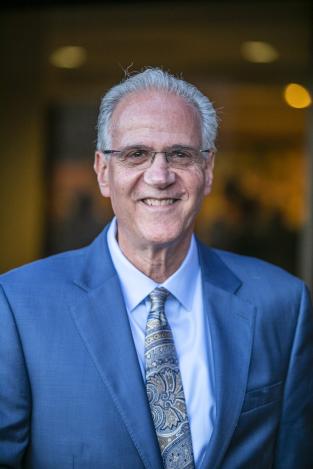
Tom Lubotsky, Bellwether Class of 2022, president, The Lubotsky Alliance Group LLC, formerly vice president and Chief Supply Chain Officer, Allina Health, links the end game's logic to a cause-and-effect relationship that extends well beyond the contracts themselves. "Gaining legitimate respect and influence without formal C-suite positioning requires provider-based healthcare supply chains to demonstrate — not merely assert — their enterprise value in ways that are visible, repeatable and directly connected to organizational imperatives," he said. "Continued expansion of supply chain's sourcing scope is foundational, particularly when approached through standardized, disciplined methods for evaluating, structuring and managing contracts across the full spectrum of non-labor spend. When supply chain helps determine whether a contract is needed and evaluates its clinical, safety, service and cost benefits — not just how it is negotiated — its role shifts from tactical execution to upstream value creation.
"Equally critical is the insertion of governance and spend controls earlier that becomes embedded into how organizations requisition goods and services, assess alternatives and authorize commitments," Lubotsky continued. "By shaping these decision pathways, supply chain leaders move from being downstream cost managers to upstream stewards of enterprise resources. This governance lens reinforces consistency, forces transparency and accountability while signaling to executive leaders that supply chain is protecting both financial and operational integrity, not merely negotiating price."
But Lubotsky cautions against expecting influence to be gained solely through process ownership.
"Provider-based supply chain leaders must also translate their work into the language of leadership — connecting sourcing decisions, resiliency strategies and risk mitigation efforts to outcomes executives already value: Margin improvement, care management and continuity, growth enablement and patient experience. Respect increases when supply chain leaders proactively frame tradeoffs, quantify impact and present options to increasing patient value rather than wait to be asked for execution support late in the decision cycle." Lubotsky emphasizes that C-suite positioning matters but shouldn't be handcuffed to the simplistic sense of title alone.
"Formal executive access accelerates visibility, shortens decision loops and legitimizes supply chain's role as a strategic co-author rather than an operational afterthought," he noted. "That said, the absence of a seat does not preclude influence. Organizations routinely grant de facto authority to leaders who consistently bring clarity, disciplined thinking and enterprise-wide perspective to complex problems. Over time, that credibility often precedes — and ultimately justifies — formal elevation.
"In the end, respect is earned when provider-based healthcare supply chains are seen as indispensable navigators of complexity: Balancing cost and innovation, standardization and clinical autonomy, speed and safety, and leading all non-labor spend transparency and accountability," Lubotsky concluded. "When leaders across the organization recognize that these tensions are being actively and skillfully managed — often without direct authority — the narrative shifts. Supply chain is no longer 'supporting the mission.' It is shaping the system's ability to deliver it."
Generate and own outcomes
Supply chain leaders who gain the most influence are the ones who own the outcomes that leadership cares about and communicate their impact in that language, according to Reuben Philip, Future Famers Class of 2025, director of product, Clarium Inc.

"Hospital executives are focused on operating margins, quality of care, patient safety and continuity of operations," he observed. "Supply chain touches all of them. The AHRMM Keys lay out a clear set of KPIs that can tell that story, things like supply expense as a percentage of net patient revenue, spend under management, inventory turns, contract compliance and fill rates. When those metrics are tracked, benchmarked against peers and presented proactively, they connect supply chain work to the organization's priorities in terms that resonate beyond procurement. The difference between 'we renegotiated 12 contracts' and 'we reduced supply expense per adjusted discharge by 4%' is framing. Same work, but one speaks the language of the CFO and the other stays inside supply chain."
In terms of C-suite positioning, Philip favors C-suite access as mattering more than titles.
"A supply chain leader with a direct line to the CFO and CMO and the data to back up their recommendations can be just as effective as someone with a formal seat at the table," he surmised. "But I'd also say the trend is moving toward formal C-suite representation, and for good reason. When you're managing such a significant portion of operating expenses and your decisions directly affect whether procedures happen on time, that warrants a strategic seat, not just an invitation when something breaks."
Supply Chain needs to remain plugged in wherever it is within an organization, whether within or outside of the C-suite, according to Maria Hames, managing partner, HealthCare Links, BLF event partner.

"Supply chain needs to demonstrate value beyond cost reduction — be more closely tied to the other areas of measured success of organization in clinical alignment, risk reduction, revenue protection, patient throughput and population health management initiatives," she said. "Improved data as helping in variation reduction, contract compliance, utilization, supply resiliency, procedure profitability, etc. Healthcare Supply Chain needs to continue to move from materials management and/or procurement to the C-suite. This will need support in education and pay equivalence of other industries as well."
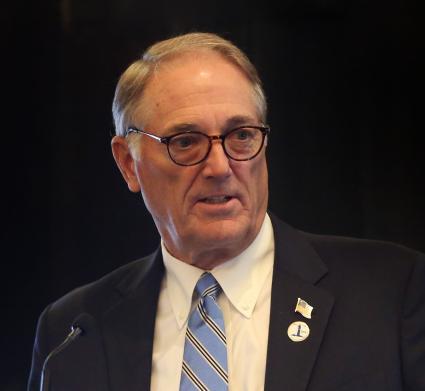
Carl Meyer, Bellwether Class of 2019, and president, The Wetrich Group, BLF event partner, refers to a banquet.
"If you are not at the table, you are on the menu as the saying goes," he quipped. "Respect and its spinoff, influence, are earned. Many who are now [Chief Supply Chain Officers] rose during COVID and demonstrated their value and are still in the C-suite, while this is not the case for others."

Charlie Miceli, Bellwether Class of 2023, emphatically pushes it one step further.
Supply Chain isn't a backroom operation anymore," he deadpanned. "Supply Chain influences the financial health of an organization as well as supporting patient safety. Continued story telling of successes, challenges and the impact of supply chain will further support awareness and respect of supply chain." During his healthcare provider-based supply chain career, Miceli oversaw key elements of financial operations for the organization.
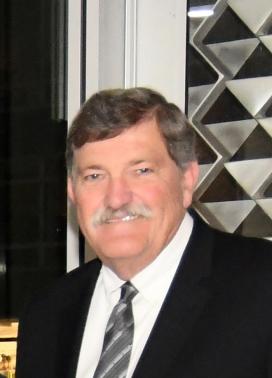
Like Meyer, Mike Langlois, Bellwether Class of 2025, cites the global pandemic as a game changer for supply chain advancement. "I believe elevation of the Supply Chain Leaders have been commonplace since COVID," he surmised. "Chief Supply Chain Officer and senior vice presidents of Supply Chain are not very prevalent in most larger organizations. We are seeing the more successful leaders now taking on more responsibility within an organization, including some financial functions, and many other support services and significant involvement in construction projects. Supply Chain Leaders without a C-Suite position should pursue these additional responsibilities."
Fuse the fragmentation
Vance Moore, Bellwether Class of 2019, points to provider consolidation and increasing scale as boosting supply chain's influence among leadership positions. "The larger the scale and potential scope will force senior leadership to consider and recruit professional supply chain leaders at very high level," he predicted.
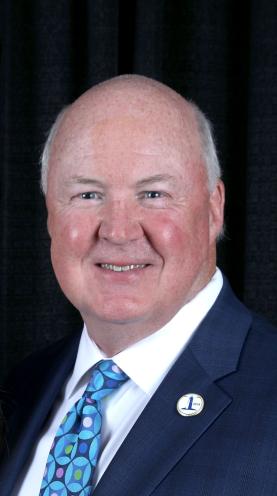
"Additionally, accepting or maybe even demanding that supply chain be a comprehensive function and not just med/surg-focused could be key to advancement," Moore continued. "In reality, supply chain should be responsible for anything that is purchased, stored or moved. We should not just be involved, but rather owners of assets, technology, people and process. We often find lab, pharmacy, clinics, procedural areas, environmental services, dietary all managing their own supply chains with a little help from their supply chain buddies. This fragmentation is territorial and not logical — it is also a significant missed opportunity for supply chain leadership and sub-optimization of our industry. Most successful companies have one supply chain function, and that scope and scale automatically elevate the function to the C-suite table."
Moore also calls for supply chain departments to convert to revenue centers from cost centers as a way to earn respect as a significant contributor.
"The financial bottom line is a uniform language that everyone speaks and understands," he told Leaders & Luminaries. "We have got to stop telling the CFO that we are saving tons of money when they can look at the P&L and see that supply spend tends to always go up every year. Many of my CFO friends tell me they don't really listen to the supply chain argument because it just does not show up on the P&L as they describe it. We must better document the reasons for supply cost increases (e.g., new technology, new product introductions, utilization issues and even census), while we continue to fight the good fight on contract negotiations, but we must also create new revenue streams that contribute to the bottom line in a traditional way. Bottom-line contribution is key to earning respect above our current perception levels."
Tom Redding, executive vice president and healthcare practice leader, St. Onge Co., Silver Sustaining Partner, prefers to steer the debate toward outcomes and output rather than corporate politics and status.

"Respect and influence are less about title and more about operational performance and organizational integration," he asserted. "Provider supply chain leaders gain influence when they translate operations into clinical and financial outcomes, embed themselves in clinical and operational governance structures and build credibility through reliability first, then strategy.
"While C-suite positioning matters to a degree, its true value is less about status and more about enabling faster alignment to enterprise priorities," Redding continued. "Ultimately, influence is earned by demonstrating that supply chain is not a back-office function, but a foundational system that enables the rest of the organization to perform. Leaders must consistently demonstrate measurable value to the organization. When they do, they earn the opportunity to contribute at a more strategic level and expand their impact beyond transactional execution into enterprise decision-making."

Fred Crans, Bellwether Class of 2020, BLF BOD Outreach Ambassador, and business development executive, St. Onge Co., Silver Sustaining Partner, sees times definitely changing.
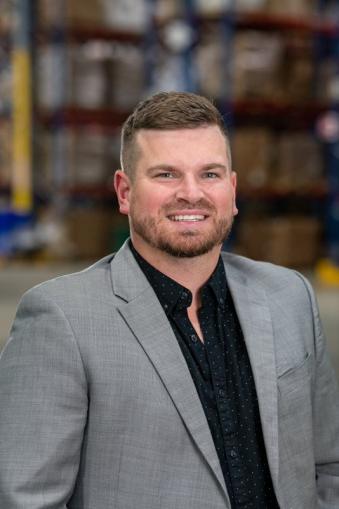
"While the number of healthcare organizations is shrinking, the number of large IDNs is growing," he observed. "Those organizations actually operate a supply chain, and therefore require formally trained supply chain leaders. The days of Horatio Alger supply chain leaders is fading away. It is being replaced with formally trained leaders whose expertise in areas such as logistics, data management, systems planning, network optimization and high-level business partner interaction may well be the difference between survival and death of the healthcare organization. The new leaders will naturally become part of the C-suite."
I believe strongly that Supply Chain's path to influence is less about title and more about demonstrated impact on enterprise outcomes, according to Cody Fisher, president, Concordance Innovations (Surgence), BLFIRE event partner.
"Supply chain earns influence when it can consistently connect its work to things the organization cares about most: Cost, quality, clinical outcomes and resilience," he indicated. "That requires a shift from reporting on activity to driving outcomes. It also requires better connection between organizations. The biggest opportunities in healthcare supply chain sit at the intersection of providers, suppliers and distributors. When supply chain leaders can bring those parties together around shared data, shared workflows and coordinated execution, they are no longer just managing an internal function. They are enabling the system to perform at a higher level. That is where influence grows.
"C-suite positioning can help accelerate that, especially in aligning priorities and removing barriers," Fisher added. "But it is not a prerequisite. What matters is the ability to operate across silos, connect disparate parts of the system and deliver results that are visible and repeatable. As those results become more consistent and more measurable, recognition follows. I see it happening among our customer base as real dollar ROI is delivered."

Barbara Strain, Bellwether Class of 2021, BLF Board Chairman and principal, Barbara Strain Consulting, sums it up this way: "Every aspect of healthcare relies on a fully mature supply chain — contracting, purchasing, logistics, inventory, value analysis, data, analytics. The best practice is to keep supply chain in the circle of leaders. All decisions are supply chain decisions. The COVID-19 pandemic solidified this."