 Emerging from behind the cloak of invisibility
Clarion calls, klaxon alarms shouldn't awaken the machine
Some say (with a degree of irony if not self-deference) that if nothing goes wrong with supply chain (e.g., no backorders, stockouts, other inventory problems that foment complaining clinicians, etc.) and no one calls or emails with their reviews, then supply chain is and must be doing its job.
As you've likely read within the stories of the feature well of this edition of Leaders & Luminaries, the mindset undergirds the profession. Time to cue up Paul Simon and Art Garfunkel's "The Sound of Silence" and embrace an old friend named darkness.
Professionals within the Bellwether Community waver on whether ennui about supply chain
represents either a good thing or a bad thing in terms of appreciation and respect.
Solution vs. prevention
"It is both a good thing and a bad thing. It is good because the highest-performing supply chains often make reliability look routine. When products are available, disruptions are avoided, and clinicians are not distracted by supply issues, supply chain is quietly protecting care delivery, operational flow and financial performance. In that sense, the absence of complaints is evidence that the system is working as intended.
"But it is also a bad thing because invisible success is often undervalued. When supply chain only gets noticed during failure, its daily contributions to resiliency, risk mitigation, continuity and value creation are easily overlooked. That dynamic can limit appreciation and respect, because leaders may mistake 'no news' for low strategic importance rather than recognizing it as the result of disciplined, proactive management.
"In the end, if supply chain is only recognized when something goes wrong, the organization misses the bigger truth: The real achievement is not simply solving problems but preventing them in the first place."
Tom Lubotsky, Bellwether Class of 2022, president, The Lubotsky Alliance Group LLC, formerly vice president and Chief Supply Chain Officer, Allina Health
Protect the plumbers
"It's both, and the tension between the two is exactly the challenge.
"It's a good thing because the best infrastructure is the kind you never have to think about. Here's an example I love: Every Super Bowl Sunday, New York City's Department of Environmental Protection sends extra water to Hillview Reservoir hours before kickoff. They know that when the halftime show ends, hundreds of thousands of people are going to flush their toilets at the same time. After Bad Bunny's performance this past February, the city saw a spike equivalent to over 760,000 toilets flushing in 15 minutes. Nobody's water pressure dropped. Nobody called to complain. Because someone planned for it. That's what great supply chain looks like: The work is invisible precisely because it was done well.
"But it's a bad thing if that success stays invisible. If the only time leadership hears from supply chain is when something breaks, the function gets defined by its failures instead of its wins. That's where proactive communication becomes critical. The supply chain leaders I've learned the most from are the ones who make their wins visible on a regular cadence, not just when there's a crisis. AHRMM's Keys and their benchmarking tool are a great place to start if you're looking for a standardized way to tell that story.
"The water pressure stays steady on Super Bowl Sunday because someone is doing excellent work behind the scenes. They did a great job making sure the whole world knows it. I think we can and should at least make sure our organizations know that!"
Reuben Philip, Future Famers Class of 2025, director of product, Clarium Inc.
Risk vs. value
"When nothing goes wrong, it often means the supply chain function is doing exactly what it is supposed to do: Ensuring the right product is in the right place at the right time, without friction. Unlike revenue or patient volume, supply chain excellence rarely appears as a real-time, celebrated metric.
"Instead, failures are immediate and highly visible (e.g., stockouts, delays, substitutions), and success becomes embedded in broader system performance and is difficult to isolate or attribute.
"This creates a structural imbalance: Risk is highly visible, but value is largely invisible. 'No complaints' is therefore a sign of strong execution, but it is not sufficient to earn sustained respect or organizational recognition. Without intentional framing, measurement and communication of impact, supply chain risks being viewed as operationally essential, yet strategically underrecognized."
Tom Redding, executive vice president and healthcare practice leader, St. Onge Co., Silver Sustaining Partner
Supply chain didn't start the fire
"Don't wait for a crisis to prove your value. Supply chain is great at firefighting — but that shouldn't be how we're defined. The leaders who gain influence are the ones who are proactive, aligned with stakeholders, and helping to drive strategy — not just respond to disruption."
Ryan Burke, Future Famers Class of 2022, vice president, Strategic Sourcing, Pandion Optimization Alliance Ryan Burke
Air traffic controllers
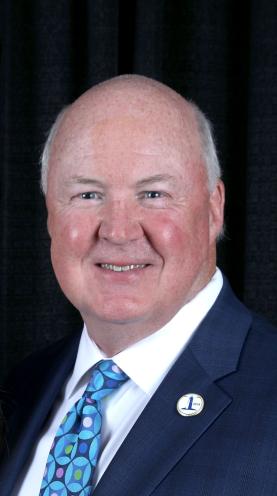
"I think we must get comfortable with 'great' being considered the lack of drama. I view supply chain leaders almost like air traffic controllers: They don't fly the planes, but they make sure all the planes are in the air staged appropriately so that they land on time without issue. Air traffic controllers are not called out for what they do, they often are called out for what they don't do. Consider linemen in football: They often exert more energy during the game than any position, but the quarterback, running backs and wide receivers get all the credit and attention. Supply chain is similar — we need to celebrate great efforts that lead to great supply chain outcomes. We need to tell our story to peers, and we need to continue to celebrate and recognize individuals and teams that can truly distinguish themselves via courageous efforts, innovated risk taking and bottom-line performance.
"I think we still have room to recreate our value proposition. Expansion of scale, scope and contribution can create new spaces for creating additional value that is both remarkable and unexpected. It is in that space where we can actually gain additional respect through our entrepreneurial spirit and bottom-line performance."
Vance Moore, Bellwether Class of 2019
Controlling the game
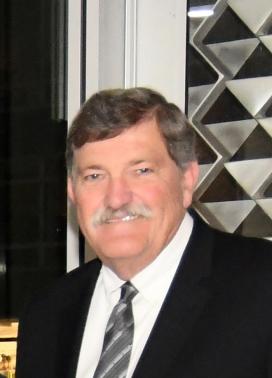
"Much like a hockey or basketball referee, if you don't notice them, they are doing a good job. To get noticed positively, however, the Supply Chain leader needs to work outside their box. Offer to take on additional responsibilities, lead an important project, solve an on-going problem. They should also make the C-Suite know what they are doing. Put together a presentation on successes and opportunities and present to the C-suite or even the Board. My most impactful programs were approved by our Board of Directors."
Mike Langlois, Bellwether Class of 2025
A hero complex?

"The truth is: Something WILL go wrong. A corollary to that truth is: Supply Chain leaders love it. Supply Chain is a function that has always thrived on the concept of Heroic Intervention. Be it a storm that wipes out manufacturing in Puerto Tico, a pandemic that kills over a million people or a 'military exercise' that drives the cost of gas up to $5 per gallon, the proud Supply Chain leader has always found a way to save the day and then spend the next five years telling anyone who will listen how great he was (I say 'he' because women are far less vain and almost guaranteed to never boast about their contributions). This is bad, VERY BAD, because it continues to reinforce the C-suite's stereotypical view of both the leadership and the function."
Fred Crans, Bellwether Class of 2020, BLF BOD Outreach Ambassador, and business development executive, St. Onge Co., Silver Sustaining Partner
Silence = success
"Maybe the better way to think about it is this: In healthcare supply chain, silence often means success. When no one is calling about a stockout, a backorder or a missing product, it usually means someone anticipated the issue, managed the exception or solved the problem before it ever reached the clinician or the patient.

"And they have often done it through sheer heroics: Working the phones, chasing substitutions, expediting orders, solving problems manually and navigating complexity most people never see.
"That deserves real respect. But the next chapter can't depend on heroics alone. We have to give supply chain leaders the technology, data and visibility they need, so resilience is built into the system, not carried on the backs of people already doing extraordinary work.
"Part of elevating the profession is helping the broader organization understand that a quiet day in supply chain isn't accidental. It is the result of incredibly complex, missioncritical work done well."
Tina Vatanka Murphy, president and CEO, Global Healthcare Exchange Inc. (GHX), BLF Platinum Sustaining and Educational Partner
View the panorama
"There is truth in that idea, but it is incomplete.
"It is good in the sense that reliability matters. Healthcare depends on supply chain working consistently. If clinicians have what they need, when they need it, that is a fundamental expectation. But if success is defined only by the absence of problems, it limits how supply chain is perceived and how it evolves.
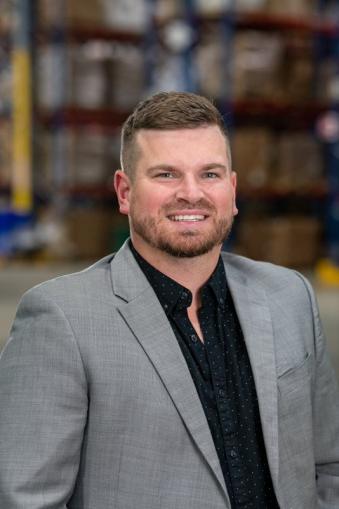
"The real opportunity is not just preventing disruption. It is improving how the system performs over time. That includes reducing cost, increasing resilience, expanding options and enabling faster, more coordinated decision-making across the network. Those types of improvements do not always show up as complaints avoided. They show up as measurable gains in efficiency, better use of resources and stronger alignment between partners. To move from a reactive perception to a strategic one, supply chain has to make those outcomes visible.
"That is where shared data environments, coordinated workflows and network-level execution become important. When organizations can see not just what happened, but what improved and why, the conversation changes. Supply chain moves from being appreciated when nothing goes wrong to being valued for how much better the system can perform.
"It is fantastic that you are asking these questions and pressing healthcare supply chain leaders to look critically at where we are now and where our industry is headed. If there is a common thread across all of these questions, it is that healthcare supply chain has been operating below its potential, not because of lack of capability, but because of fragmentation. The opportunity in front of us is to connect the system, and I couldn't be more excited about how we are addressing that reality. "When providers, suppliers, and distributors operate from shared data and coordinate decisions in real time, supply chain becomes more than a support function. It becomes a strategic enabler of how healthcare is delivered. That is the healthcare supply chain needed to sustain healthcare today. As we deliver on that promise, respect, influence, and impact will naturally follow."
Cody Fisher, president, Concordance Innovations (Surgence), BLFIRE event partner
Updating the scoreboard
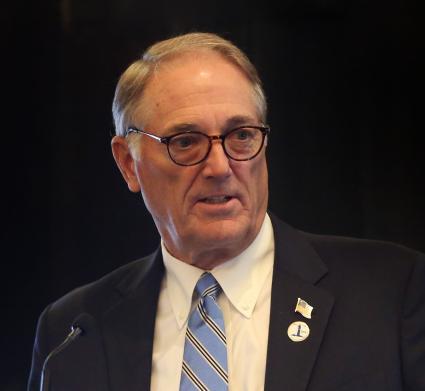
When Supply Chain has a scoreboard that details successes that can be communicated throughout the organization, their value can be demonstrated. Similarly, when they can document how they responded to issues that were not of their making (e.g., backorders, drug and device shortages, etc.) in a manner that allowed the patient care to continue without interruption, they gain added credibility."
Carl Meyer, Bellwether Class of 2019, president, The Wetrich Group, BLF event partner
Measure accurately and contextually

"I think it is good because it is showing the supply chain is reliable and resilient — this comes from proactive strategy. But we should be measured to our organizations' success so the needed investment in supply chain grows."
Maria Hames, managing partner, HealthCare Links, BLF event partner Maria Hames
Navigating the operational asteroid field

"It is perception from the other side of the coin. There are many occurrences every day out of your organization's supply chain control — recalls, backorders, manufacturer production issues, products not performing as they should in the hands of end users, IT downtime, truck delays, weather delays, diseases requiring specialty products, outbreaks, multi-casualty accidents and a myriad of other disruptions."
Barbara Strain, Barbara Strain Consulting, Bellwether Class of 2021, BLF Board Chairman
Snooze at your own peril
"Leaders are asleep at the switch if this status/thought process is in place."
Charlie Miceli, Bellwether Class of 2023