
Media
Previous Press Releases
 Healthcare Supply Chain Leadership Hall of Fame to welcome 8 innovators, leaders, pioneers, visionaries for induction this fall
SCHAUMBURG, IL (June 29, 2026) — Bellwether League Foundation's Healthcare Supply Chain Leadership Hall of Fame selected eight professionals, recognized as innovators, leaders, pioneers and visionaries paving the way forward for their industry and professional contributions and performance, as honorees of the Bellwether Class of 2026. They will enter the Hall with 154 earlier honorees inducted since the organization began.
Bellwether League Foundation (BLF) selected the following professionals for the 19th Bellwether Class: John Bardis, retired Founder & Chairman, MedAssets, and former Assistant Secretary, Administration, U.S. Department of Health and Human Services; William A. Baum Sr. (1891-1964), Founder & Board Chairman, William A. Baum Co. Inc., Copiague, NY; Pamela L. Bryant, Senior Vice President and Chief Supply Chain Officer, Parkland Health, Dallas; Joseph R. Colonna, Chief Supply Chain & Project Management Officer, Piedmont Health, Atlanta; Capt. Thomas R. Defibaugh (1940-2019), U.S. Navy Medical Service Corps, U.S. Navy Bureau of Medicine & Surgery; Jay M. Kirkpatrick, Vice President, Supply Chain Operations, Lifepoint Health, Brentwood, TN; Debbie Sprindzunas, Retired Executive Director, Association of Healthcare Resource and Materials Management (AHRMM), Chicago; and Mark Welch, Senior Vice President, Supply Chain, Novant Health, Charlotte, NC.
Bellwether Class of 2026 honorees will be inducted at the 19th Annual Bellwether League Foundation Induction & Recognition Event (BLFIRE), scheduled for Monday, November 16, at Georgia Southern University's Armstrong Center, Savannah, GA.
BLF selected these professionals for their achievements and contributions in the delivery of quality care through efficient and innovative supply chain operations. They represent creative thinkers who take the initiative, expand the boundaries of what's possible, and perform in a way that improves and promotes the profession of supply chain management among hospitals and other healthcare provider organizations, group purchasing organizations (GPOs), product manufacturers and distributors, consulting firms, academic/educational institutions and media properties.
"We congratulate the eight 2026 Bellwether Honorees who represent a wide range of roles, facilities and organizations that they have led over their careers," said Barbara Strain, Bellwether Class of 2021, BLF Board Chairman. "Each of their bodies of work read like the history of supply chain leadership. Take a few minutes to acquaint yourselves with each individual highlighted below and plan on honoring them personally at our live induction event on November 16 in Savannah."
BLF Advisory Council Chairman Gary Rakes, Bellwether Class of 2021, agreed. "The newest Bellwether Hall of Fame honorees have transformed challenges into progress, innovation into impact and careers into lasting legacies. Their contributions have not only advanced healthcare supply chain excellence but have helped ensure better outcomes for the patients and communities we serve. Join me in congratulating these eight distinguished and extremely talented supply chain executives as the Bellwether Class of 2026 Hall of Fame honorees!"
Bellwether Class of 2026
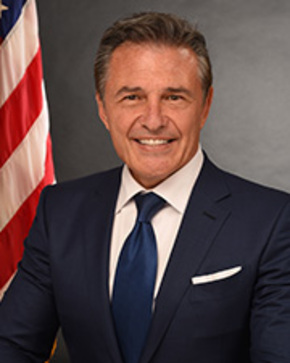
John Bardis entering the group purchasing organization (GPO) ring in the mid-1990s was nothing short of executing a half nelson that quickly moved to a cradle on the healthcare industry segment. He acquired one leading national GPO, then added several more companies to the mix to broaden and bulk up its reach into clinical, financial and operational improvement. These efforts homed in on managing physician preference item expenses, linking supply chain technology to revenue cycle to drive financial accuracy and efficiency and bringing renewed interest in delivering on contractual savings outcomes. His efforts were merely a continuation of his earlier impact on healthcare product distribution, equipment manufacturing and provider organization management where he converted eight-digit revenue streams at three different companies to nine-digits, earning awards for his business acumen, foresight and prowess. After selling what became the third-largest GPO for a 10-digit sum, Bardis migrated next to the politcal arena to oversee administrative, human resources and information technology operations for the U.S. Department of Health and Human Services with a mission to control federal agency costs and improve efficiency.

William A. Baum Sr. originally worked as a statistical clerk for a large clinic that performed pre-employment and pre-insurance physical examinations and medical testing and noticed a serious problem. He recognized that blood pressure readings from the instruments in use at the time were unreliable. Rather than complain about it or do nothing, Baum spotted an opportunity to improve the product and technique that would become the bedrock and gold standard for blood pressure monitoring for decades to come. In 1910, he created a simple, relatively inexpensive and easy-to-use mercury gravity machine that he called the “Baumanometer,” patented it and built a company around it that continues today to supply physicians and hospitals with the technology. Eleven years after the debut of Baum’s creation, the Metropolitan Life Insurance Co. recognized the quality of the branded sphygmomanometer and ordered 1,000 of them for their people to conduct more accurate readings of potential policyholders. Based on his experience, Baum knew what his clinical customers needed to measure certain vital signs and provided reliable products to do the job accurately.
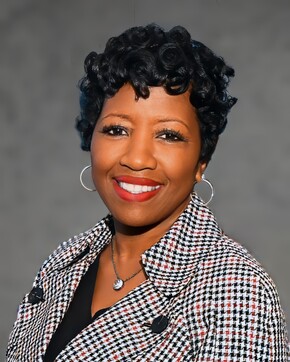
Pamela L. Bryant, throughout her healthcare and non-healthcare supply chain career to date, has served as the consummate playmaker for her respective teams. Whether it involved managing operations for an environmental services company that equipped and re-certified buildings for occupancy after renovations to revamping supply chain processes for an orthotics and prosthetics manufacture to leading supply chain operations at a variety of health systems, hospitals and integrated delivery networks (IDNs) navigating through mergers, acquisitions, GPO changes and crises, such as the global COVID-19 pandemic, Bryant consistently developed and implemented intricate plans to keep the supply lines open and flowing. During the pandemic, Bryant’s efforts and achievements attracted countywide interest and recruitment to lead supply chain initiatives for community clinics during the pandemic via her provider organization’s consolidated service center. Bryant embraced value analysis principles to communicate and facilitate meaningful discussions with clinicians in promoting the need for product and procedural standardization for the benefit of clinical outcomes, patient care and the bottom line. She also demonstrated her commitment to developing the next generation of supply chain leaders through her “Supply Chain Academy” program and advocated for leadership and workplace diversity to foster business growth among women and minorities.

Joseph R. Colonna upends the traditional view of supply chain management, homing in on leadership skill development over improving technical aspects simply because the latter can be taught and learned while the former must be experienced over time. For Colonna, part of leadership development involves engaging administrative, clinical, financial and operational customers as active participants in decision-making and to hone communication, facilitation, marketing and sales skills in ways that benefit the customer, organization and patients served. Through his professional experience, Colonna has determined how to expand supply chain’s sphere of influence beyond the transactional nature of the department and function to something more strategic and tactical as a true contributor to top-line growth and bottom-line savings. One noteworthy mutual win? His IDN’s Chief Medical Officer turned to him for help with quality and safety initiatives. Still, he oversees successful supply chain operations at an award-winning southeastern IDN that continues to expand in facilities served while also routinely generating millions in cost savings through innovative processes and programs that attract attention to his dedicated team and his department’s expertise.
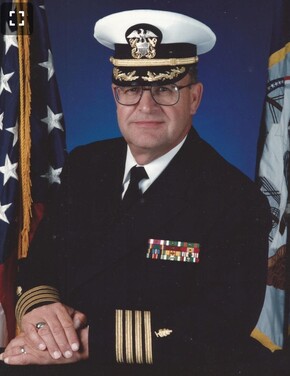
Captain Thomas R. Defibaugh, MSC, USN(RET), while serving as the Commanding Officer of the Naval Medical Logistics Command and the Chief of Logistics for the U.S. Navy’s Bureau of Medicine and Surgery, ensured that all military forces afloat and at Naval Medical Treatment Facilities around the globe had world-class medical equipment and supplies available through keenly designed and executed supply chain programs in contracting, distribution and logistics. His mentality and philosophy during combat activities or peacetime development was to deliver quality products, services and support so that his customers were “always ready” to act or respond to need. To reinforce continuous process improvement, as the Commanding Officer of the Naval Medical Logistics Command, Defibaugh spearheaded Navy Medicine’s “first ever” ISO 9001 certification for any medical command in 1997. Further, in his role as the Chief of Logistics for U.S. Navy Medicine, he worked jointly with counterparts in the U.S. Army and the U.S. Air Force to facilitate collaboration and cooperation, a “tri-service” effort to develop cohesive programs, policies and technology to standardize and streamline the military logistics services across branches even as each could support its unique service’s missions.

Jay M. Kirkpatrick may be recognized for leading and standardizing processes within large-scale supply chain operations throughout several nationwide organizations, but he continues to concentrate on the granular, redesigning procure-to-pay and distribution models that service member community and rural hospitals in 23 states. Kirkpatrick was an active part of the leadership team in a national investor-owned healthcare system that around the turn of the millennium developed a shared services model comprising one of the first fully centralized procurement and accounts payable platforms in the industry that generated more than $1 billion in cumulative cost savings. He also served as part of a grassroots collaborative formed to experiment with advanced demand-management practices. Kirkpatrick is known for bringing corporate, divisional and facility leadership together, aligning and integrating device and product, distribution and purchased services strategies with administrative, clinical, financial and operational priorities and their respective leaders. Kirkpatrick also serves as a committee participant and frequent speaker at more than a half-dozen distinct national association conferences and industry forums as well as a mentor to more than two dozen next-generation supply chain leaders.

Debbie Sprindzunas guided the Association for Healthcare Resource and Materials Management (AHRMM) during one of the national group’s most topsy-turvy eras in its more than six-decade history. During her quarter-century tenure of leadership following boots-on-the-ground leadership support, Sprindzunas served as an effective bridge between the needs of the personal membership group of the American Hospital Association (AHA) and the demands of its parent organization. Under her watch, Sprindzunas helped AHRMM’s member-elected leadership navigate through such challenges as the mergers-and-acquisitions frenzy during healthcare reform years under three different presidential administrations, the internet-based electronic commerce bubble, the roiling and ongoing supply data standards movement, the emergence of advanced tracking and tracing technologies and the rise of information technology integration for supply chain. She also led AHRMM to weather the industry aftermath of the 9/11 terrorist attacks and explore how to keep supply chains flowing during crises. Sprindzunas oversaw AHRMM’s merger with a struggling industry competitor that AHRMM incorporated with all the benefits, dignity and respect for the membership, and faced the debut of at least a half-dozen organizations competing for AHRMM members’ attention, participation and market share.

Mark Welch played a central role in his provider organization’s growth to a $12-billion multistate system from a $1.5-billion system by driving initiatives that strengthened data integrity, streamlined processes, enhanced supplier relationships and positioned supply chain as a core enabler of patient-focused operations. Under Welch’s leadership, his organization centralized supply chain operations, established a self-distribution model more than two decades ago and launched a successful strategic sourcing division two years later. Welch co-developed and co-led a clinical value initiative with the Chief Medical Officer that effectively engaged physicians and surgeons in value-based decision-making through data transparency, clinical alignment and trust, generating more than $750 million in cost savings during a single decade. Welch also built a nationally recognized leadership team that fostered career development and progress, along with a solid foundation of growth through crisis-driven market volatility. Through his active mentoring, numerous executives advanced to Chief Supply Chain Officer roles. He remains an active leader within several multi-organizational aggregation networks. Under Welch’s leadership, his organization’s supplier diversity initiatives have exceeded $1 billion in product and service spending and projects continued growth.
About Bellwether League Foundation
Bellwether League FoundationTM (BLF) is an independent 501(c)3 nonprofit charitable organization that offers programs to educate, endow and evaluate professionals in healthcare supply chain performance excellence. BLF accomplishes this through its primary operation, the Healthcare Supply Chain Leadership Hall of FameTM, its growing philanthropic efforts, which include Collegiate Capstone Projects and scholarships and its various multimedia properties.
The Healthcare Supply Chain Leadership Hall of Fame evaluates and validates professionals submitted for consideration in its three award programs: Bellwether Honorees, Ammer Honorees and Future Famers. The Hall of Fame also offers educational and professional development content via the annual Bellwether Leadership Symposium and its "Leaders & Luminaries" multimedia properties of online and printed content.
The Hall of Fame selects deceased, retired and currently active professionals with a minimum of 25 years of exemplary service and leadership performance in supply chain operations that meet its criteria to be recognized publicly as Bellwether Class Honorees.
Future Famers represent supply chain professionals early in their healthcare careers (first 10- 12 years) who do not yet qualify for Bellwether consideration but have contributed meaningfully to the profession and industry.
Honorees who receive the "Dean S. Ammer Award for Healthcare Supply Chain Performance Excellence" represent noteworthy executives and professionals in the middle of their careers who, through their innovative leadership and influential project management experience, best exemplify the practice and spirit of healthcare supply chain performance excellence.
To date, the Healthcare Supply Chain Leadership Hall of Fame has inducted 148 innovators, leaders and pioneers in healthcare supply chain management in seven distinct categories: Provider- Based Supply Chain Management, Manufacturing, Distribution, Group Purchasing, Consulting Services, Academia and Media. The Hall of Fame also has recognized 42 Future Famers and six Ammer Honorees.
BLF's philanthropy efforts support capstone educational and developmental projects, grants and scholarships to college-bound high school students who plan to study supply chain curricula, current college students who major in supply chain-related careers and professionals who pursue continuing education through associations and universities.
BLF salutes its six sustaining sponsors at the Founding/Platinum level — GHX, HealthTrust, Owens & Minor, Premier, Vizient and Wingfoot Media — and more than 21 additional sustaining sponsors at the Gold, Silver and Bronze levels. This is a dedicated group that represents manufacturers, distributors, group purchasing organizations (GPOs), integrated delivery networks (IDNs), consulting firms, associations and media outlets. BLF also appreciates and thanks its devoted corporate and professional donors for their generosity, participation and partnership.
Launched in late July 2007 by a group of influential veterans in the healthcare supply chain industry, Bellwether League Foundation began as a 501(c)(6) not-for-profit corporation that upgraded to a 501(c)(3) nonprofit organization in January 2021.


Site Search

Copyright © 2026 Bellwether League Foundation, All Rights Reserved.